
Research Lines
The POPADAPT project aims to understand how shifts in habitats, caused by human-induced global warming or past selective events, impact the genomes of humans, Drosophila, and Vibrio. The researchers will develop statistical tools to detect bursts of adaptation from genomic data and create PopLife, an open reference genome browser in Population Genomics for various species. They will combine experimental evolution, bioinformatics, and statistical analysis to study past and current adaptations and predict future adaptations to environmental changes and emerging diseases. The project will focus on natural selection, hybridization, and infectious diseases and aims to create a valuable resource for studying population genomics.
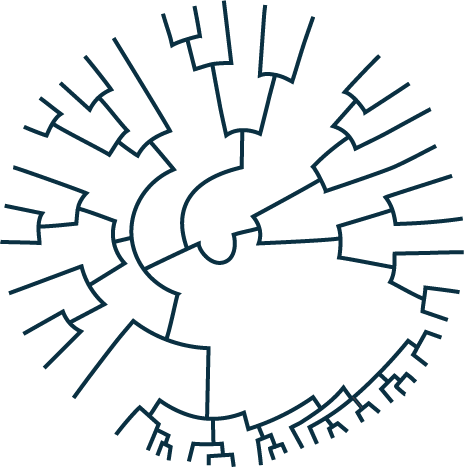
Genomic signatures of adaptation in humans, Drosophila and Vibrio
The researchers use theoretical, statistical, and bioinformatics approaches to analyze population genomics data and identify adaptive potential and selection in different organisms. They created PopFly and PopHuman browsers to study Drosophila melanogaster and human genomes, respectively, and developed iMKT and PopHumanVar browsers to catalog putative genome regions undergoing adaptive selection and facilitate their exploration. They plan to create a new statistical approach to estimate the fraction of adaptive substitutions in any genomic region and apply it to study Vibrio parahaemolyticus, a species under global expansion due to climate change, by collecting 10,000 representative genomes to identify targets of positive selection.
1A – Interpreting signatures of recent adaptation in the human genome
1B – Searching signatures of genomic adaptation in Vibrio
1C – Developing a new statistical method to estimate adaptive substitutions

Responses to environmental stress using Drosophila and Vibrio as model organisms
The study aims to understand how populations with different biogeographical histories adapt to changing thermal conditions caused by climate change. They will use experimental evolution to mimic continuous increase in average temperature and thermal amplitude, and study life-history traits, physiological and behavioral traits. The team will also analyze the role of histone residues in transcriptional regulation under heat stress conditions and perform a genomic study of chromatin marks in gonads of D. subobscura. Additionally, they will perform a comparative transcriptomic study in parental species and their hybrids. Finally, the study will apply a microcosm essay to investigate the competitive fitness, thermal tolerance, and evolutionary trajectories of Vibrio parahaemolyticus in different temperature-controlled environments.
2A – Thermal experimental evolution in populations of Drosophila subobscura
2B – Species hybridization and genomic stress
2C – Vibrio genomic adaptation using experimental evolution in microcosm

PopLife: a reference Population Genomics browser
The availability of public genome data has greatly contributed to genomics research. The objective is to update and expand the PopFly and PopHuman genome browsers with new genomic data, and to create a reference population genomics browser for eukaryotes and prokaryotes – the PopLife population genomics browser. This will be achieved by incorporating new genome sequences from a range of species, including data from 10,000 genomes of Vibrio that will be analyzed in this project. The goal is to provide an open resource for the research community working in genome variation.